Word Age: The Grand Expedition
- 4.2
- Rating
- 10.00K
- Installs
- Free
- Price

 Analysis by App-foxy
I spent time with Word Age: The Grand Expedition as a casual word game, paying particular attention to how easy it is to read, navigate, and play in ordinary situations. Its central idea is appealing: solve word puzzles while moving through an archaeological adventure. That combination gives the familiar word-game format a little more purpose than simply completing isolated challenges, and it makes short sessions feel connected.
Developed by Night Owl Productions, the game is free to start and is listed for Everyone. It belongs firmly in the word category, so the main appeal is mental play rather than action, reflexes, or complex controls. I can see it fitting a quiet morning, a commute with a reliable connection, or a few minutes when I want something more active than scrolling but less demanding than a full adventure game.
The current version is 1.2.2, and the game runs on Android 7.0 or later. It has reached over ten thousand installs and holds a 4.2 average from a relatively small group of ratings, with a little over ten written reviews. Those figures suggest a modest but positive early audience rather than a huge established community. I would treat that as useful context: this is a small word-game experience to try for yourself, not a title whose reputation is backed by a massive player base.
You May Also Like

 Blood Strike: 2.5 Anniversary
Blood Strike’s Loadouts Turn Every Drop Into a Tactical Gamble
A close look at Blood Strike’s custom loadouts: how fast access to signature weapons reshapes its battle royale rhythm, rewards preparation, and narrows the gap between fights.

 Pandora - Music & Podcasts
Pandora’s Music Is Easy to Start, but Harder to Recover
Pandora’s strength is its low-effort path from a seed to a station. Its weak spot is how much confidence it asks you to place in connection, setup, and quiet recovery.

 8 Ball Pool
 Is Built on Rivalries, Rematches, and Routine
A close look at the rivalries, rematches, shared routines, and unanswered safety questions that turn a quick pool match into a persistent mobile community.

 Samsung Music
’s Quiet Strength Is Playing What You Already Own
Its reach comes less from spectacle than from dependable access to a personal library. That simplicity is both the app’s strongest retention engine and its ceiling.

 AccuWeather: Weather Radar
AccuWeather Review: A Quick, Clear Forecast for Everyday Decisions
For everyday plans, the best forecast is the one you can understand quickly. AccuWeather makes rain timing, radar, and local conditions easy to act on, with a few trade-offs.

 Hill Climb Racing
Why Hill Climb Racing Still Turns Crashes Into One More Run
A tiny car, a bumpy hill and one more upgrade: Hill Climb Racing keeps resurfacing because its simple chaos makes every near-miss feel personal.
More From Our News Desk
View All News


How comfortably the game presents its puzzles
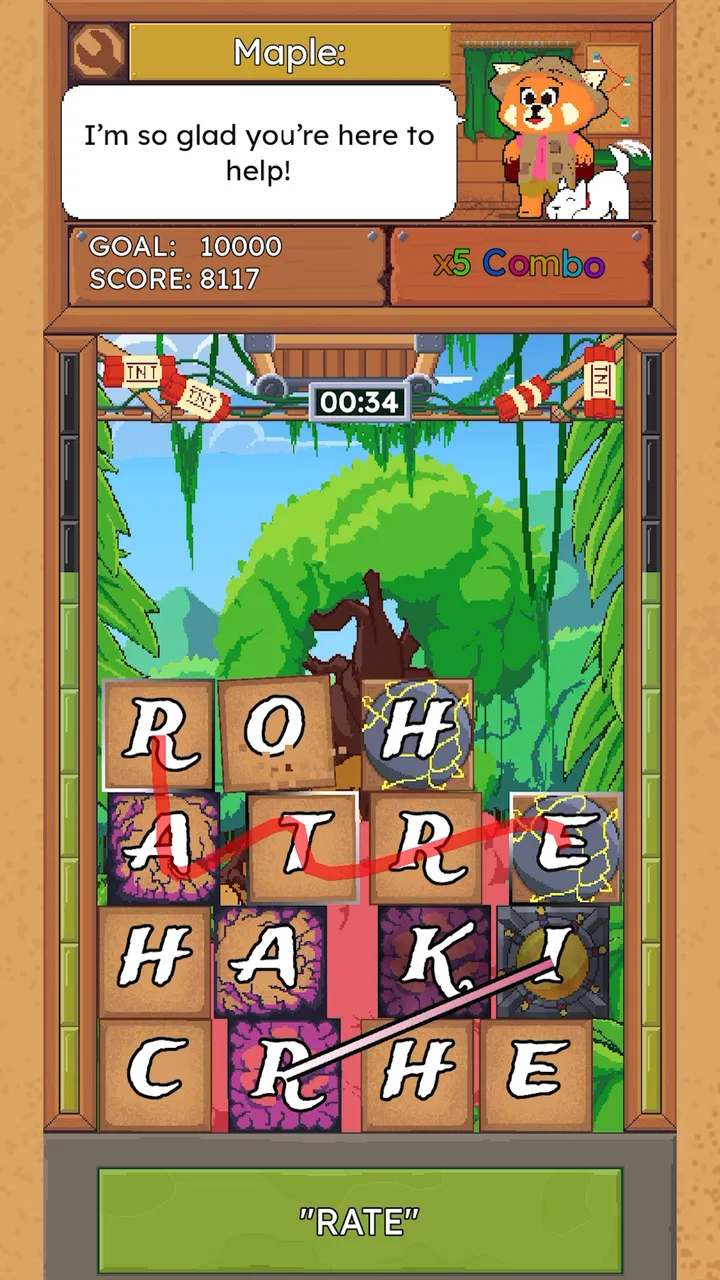
I find the game’s word-focused presentation easiest to judge when I play one puzzle without rushing: the archaeological framing gives each challenge a sense of place, while the letters remain the main task. That balance is worth considering if you want a casual game that feels more purposeful than a bare word grid. Next, I look at how that presentation shapes a practical session and the small choices that can make it more comfortable.
Readability and navigation
For a word puzzle, presentation matters almost as much as the vocabulary itself. Players need to distinguish letters quickly, understand which part of the screen is interactive, and recognize what has already been completed. In my experience with this type of game, a clean layout can make a moderate challenge feel satisfying, while crowded presentation can turn a simple puzzle into an exercise in searching the interface.
Word Age benefits from having a focused purpose. The archaeological framing gives the session a sense of direction, so I am not just opening a random letter board with no context. The adventure theme also helps break up the repetition that can appear in ordinary word games. Instead of treating every puzzle as an identical task, I feel more motivated to continue because each one belongs to a broader journey.
That said, the theme should not be mistaken for a replacement for clear navigation. A player who prefers extremely minimal word puzzles may find the adventure presentation less direct than a basic daily-word app. Those alternatives often put the grid, keyboard, or answer area immediately at the center. Here, the surrounding expedition concept is part of the experience, which is enjoyable for me but may feel like extra visual or navigational material to someone who wants only a fast vocabulary workout.
One practical habit helped me: I treated each puzzle as a short focused task instead of trying to rush through the surrounding progression. That made it easier to notice the available letters and avoid tapping impulsively. It is a small adjustment, but it matters for players who read more slowly, who are learning English vocabulary, or who simply prefer accuracy over speed.
The game is also more approachable when I play with the phone held steadily and the screen free from glare. That sounds obvious, but word games invite casual use in awkward places, and small visual distractions can have an outsized effect when the entire challenge depends on recognizing letter sequences. A table or stable lap is better than attempting a puzzle while walking or carrying something.
What the archaeological setting adds
The expedition angle is not just decoration from my point of view. It gives the game a stronger identity than a collection of disconnected word boards. I enjoy the feeling that solving a puzzle contributes to a larger destination, even when I am only playing for a few minutes. That sense of continuity is especially useful for people who lose interest in daily word games once the novelty of the format wears off.
There is a trade-off, though. Players who want a pure test of vocabulary may prefer an app with fewer thematic elements and a more compressed route from launch to puzzle. Word Age is better suited to someone who likes a little atmosphere around the words. It is not the first choice I would make for a timed competition, a social word battle, or a strict daily routine built around comparing results with friends.
I also found that the setting creates a useful mental pause between puzzles. Rather than treating the game like a continuous stream of answers, I can stop after a small section and return later without feeling that I abandoned a long match. That makes it a good candidate for fragmented play, provided the current device and environment make reading comfortable.
Motor and sensory considerations
Word puzzles are usually less demanding on motor skills than action games, and that is one of this title’s natural strengths. The core activity is selecting or entering words rather than steering a character through a fast environment. A player who finds rapid swipes, repeated button presses, or timing-based controls tiring may find this format more manageable.
Still, “less demanding” does not mean effortless for everyone. Word games can require repeated tapping, careful selection, and sustained visual attention. If a player has limited reach, hand tremors, joint pain, or difficulty maintaining a steady grip, the comfort of the experience will depend on how the particular device responds to those inputs. I would not assume that a calm puzzle automatically removes every motor barrier.
The sensory side deserves similar care. Letter-based play places a heavy load on vision, contrast recognition, and the ability to separate similar shapes. Players with low vision may need to experiment with the phone’s own display settings or choose a larger screen. I would also avoid playing in direct sunlight, where reflections can make letter recognition unnecessarily difficult.
For players sensitive to sound, a quiet setting or muted device can make the game easier to fit into daily life. I do not rely on audio to understand the words themselves, which is helpful when I am in a library, on public transport, or sharing a room. At the same time, anyone who depends on sound cues should check the game personally rather than assuming that every important event is communicated in a way that suits them.
A useful approach for mixed-ability households is to let the person who is most comfortable with the screen handle the navigation while another player contributes the word-solving. That turns the game into a cooperative verbal activity without requiring everyone to interact with the device equally. It works particularly well for families, caregivers, or friends who want a low-pressure puzzle to discuss together.
Situational access in everyday use
I can imagine opening Word Age during a waiting period when I have enough attention for a puzzle but not enough time for a long game. A doctor’s waiting room, a lunch break, or a quiet train ride are more suitable than a crowded sidewalk. The archaeological structure gives a short session a satisfying endpoint, while the word format means I can focus on one challenge without learning a large control system first.
It is also a reasonable choice for someone trying to reduce passive phone use. Instead of endlessly refreshing a feed, I can spend a few minutes searching for patterns, testing vocabulary, and making a deliberate decision. That does not make every session productive in a strict sense, but it does make the time feel more mentally engaged.
Players who use English as an additional language may find the game both useful and demanding. Word puzzles expose spelling patterns and common combinations, but they can also punish unfamiliar vocabulary in a way that feels less like exploration and more like guessing. I would recommend approaching it as a relaxed language exercise rather than a formal learning tool. Keeping a note of unfamiliar words could turn difficult rounds into a personal vocabulary list, but the game itself should not be treated as a substitute for structured language instruction.
The Everyone rating makes the game suitable for a broad audience in age terms, and I think its calm word-focused format is more family-friendly than many competitive or combat-oriented alternatives. Even so, younger players may need help with difficult vocabulary, while older players may appreciate a larger display and slower, more deliberate sessions. The age label is a useful starting point, not a guarantee that every puzzle will feel equally accessible to every person.
Because the game is free, the initial decision is relatively easy: install it and see whether the puzzle presentation suits your eyes and playing style. The important financial detail comes later. In-app purchases range from $0.99 to $99.99 per item, so I would be careful around optional spending, especially if children use the device. A free download can still lead to meaningful costs if purchases are made casually.
Where the experience still creates friction
The biggest limitation for me is that word games depend on a narrow kind of attention. If I am tired, distracted, or surrounded by movement, I may understand the objective but struggle to process the letters efficiently. That is not a flaw unique to this game, but the archaeological theme cannot solve it. Players looking for something they can play almost automatically may prefer a simple matching game or an audio-led experience.
Vocabulary is another natural barrier. A puzzle can be logically well designed and still feel inaccessible when it expects a word I do not know. This is especially relevant for younger readers, people learning the language, and players with certain cognitive differences that affect word retrieval. The game is most enjoyable when I see a path toward the answer; repeated dead ends can become discouraging if there is no comfortable way to recover.
I would also avoid recommending it to someone who specifically needs a robust accessibility configuration. The game’s basic word format may be easier than a fast action title, but that alone does not establish support for screen readers, alternative input methods, adjustable text, or specialized visual controls. Anyone who depends on those tools should test the actual interface before committing time or making any purchase.
Another consideration is value over time. The adventure structure gives the puzzles a reason to exist, but players who have already exhausted several similar word apps may want more variety than this format provides. A daily-word alternative is better for a fixed once-a-day ritual. A crossword app may be better for clue-based solving. A competitive word game is more suitable when the main motivation is playing against other people. Word Age occupies a middle ground: it combines word challenges with a themed journey rather than specializing in one of those formats.
For me, the smartest way to use it is in short sessions with a clear stopping point. I would not buy an item simply because a puzzle feels frustrating, and I would not assume that spending more will make the underlying word challenge more enjoyable. If progress slows, taking a break or writing down possible letter patterns is often better than turning the moment into an impulse purchase.
Who will get the most from it
This game is a good match for players who enjoy word puzzles but want a little narrative atmosphere around them. It suits people who like exploring a themed progression, solving at their own pace, and returning for brief sessions. It may also work well for families or friends who enjoy discussing possible answers together, since the central challenge is easy to understand even when the vocabulary varies between players.
I would be more cautious about recommending it to someone seeking advanced crossword construction, head-to-head competition, or a formal educational curriculum. Those users will probably get more from a specialized alternative. I would also suggest caution for anyone with strong visual, motor, or language-access needs until they have personally checked whether the interface works with their usual device settings and input habits.
The developer, Night Owl Productions, has given the game a clear identity rather than presenting another anonymous letter exercise. Its early audience is still relatively small, but the 4.2 average indicates that the initial reception has been favorable. I see that as encouraging without treating it as proof that every player will find the same level of comfort or challenge.
My inclusive verdict
Word Age: The Grand Expedition works best when I approach it as a relaxed, themed word journey rather than a universal puzzle solution. Its strongest quality is the combination of familiar vocabulary play and archaeological adventure, which gives short sessions more character. The free entry point and Everyone rating make it easy to try, while support for Android 7.0 and later keeps it available to many older devices.
Its accessibility is more about the naturally slower, non-action format than about specialized support. That distinction matters. Players who benefit from avoiding rapid movement and reaction tests may find it welcoming, while those who require specific visual, auditory, motor, or cognitive accommodations should evaluate the live interface carefully. The same word-focused design that helps one player can challenge another through small text, unfamiliar vocabulary, or repeated tapping.
My practical recommendation is to test it in the setting where you expect to play: use the device you normally carry, try a puzzle in your preferred brightness and sound conditions, and see whether the letters remain comfortable after several minutes. If the presentation feels clear and the expedition theme motivates you, this is an enjoyable free word game with a distinct personality. If you want the most stripped-down daily puzzle, a competitive word arena, or a fully specialized accessibility experience, another category-specific option may serve you better.
For the right player, the game offers a pleasant balance: enough structure to make progress meaningful, enough simplicity for casual use, and enough vocabulary work to keep the mind involved. I would recommend giving it a try, while keeping in mind that optional purchases can reach $99.99 per item and that personal comfort with the interface will matter more than the adventure theme alone.
FAQs for Word Age: The Grand Expedition
01What is Word Age: The Grand Expedition?
Word Age: The Grand Expedition is a word puzzle adventure that combines classic word-building gameplay with an exploration theme. Players create words from available letters to complete levels, overcome challenges, and progress through different destinations. The game is designed for casual sessions, but its increasing difficulty also gives experienced puzzle fans a reason to keep playing.
02How does the gameplay work in Word Age: The Grand Expedition?
In each stage, you arrange or connect letters to discover the words requested by the puzzle. Solving words helps you advance through the expedition and may unlock new locations, objectives, or rewards. The early levels are easy to understand, making the game approachable for beginners, while later puzzles require a broader vocabulary and more careful thinking.
03Can Word Age: The Grand Expedition be played offline?
Many word puzzle games support offline play, but the exact availability of offline features can depend on the current version of Word Age: The Grand Expedition and the device being used. You may be able to complete previously loaded levels without an internet connection, while advertisements, cloud synchronization, updates, or certain bonus features could require access to the internet.
04Is Word Age: The Grand Expedition free to download?
Word Age: The Grand Expedition can generally be downloaded without an upfront purchase, although the game may include optional in-app purchases. These purchases can provide hints, extra resources, or other conveniences, but they are not necessarily required to enjoy the main word challenges. Before downloading, check the store listing for current pricing, advertisements, and purchase details.
05Is Word Age: The Grand Expedition suitable for children and families?
The game is likely to appeal to families because it focuses on vocabulary, spelling, and logical thinking rather than action-oriented gameplay. However, parents should review the age rating, advertising policy, and in-app purchase settings before allowing younger children to play. Difficulty may also vary depending on the player’s language skills, vocabulary, and familiarity with word puzzles.
Pros
- Relaxed word puzzles suitable for short or longer play sessions.
- Exploration theme gives progression a stronger sense of purpose.
- Gradually increasing difficulty keeps the journey engaging.
- Helpful boosters can make difficult levels less frustrating.
- Works well for players who enjoy vocabulary-based challenges.
Cons
- Some puzzles may depend on obscure or unfamiliar words.
- Later stages can feel repetitive if played for long sessions.
- Boosters and extra attempts may be limited without additional spending.
- Small screens can make longer words harder to scan quickly.
- Players seeking fast action may find the pace too slow.

Word Age: The Grand Expedition
Gallery